
Yana Suchy, Ph.D.
 |
Professor, Clinical Psychology, NeuropsychologyContact InformationOffice: 1334 BEHS |
Research Interests
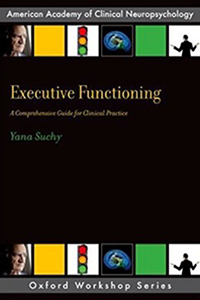
My research is in the area of neuropsychology, with a particular focus on executive functions. Executive functions refer to a set of abilities that allow us to choose the most appropriate behaviors given different contexts, to plan ahead and follow through with our plans, and to avoid acting on impulses. In other words, it is our intact and mature executive functioning that makes it possible for us to avoid behaviors that are typical of babies and young children, such as grabbing someone else's food when hungry, crying when frustrated, or purposelessly wondering around when looking for something we have lost.
Many neurologic populations, such as patients with certain types of dementia, stroke, or serious brain injury, can have profound impairments in executive functioning. However, other individuals, such as those characterized by certain personality disorders, survivors of mild brain injuries, or individuals in preclinical stages of dementia exhibit lapses in executive functioning that are intermittent and triggered in unpredictable ways. Such mild or intermittent executive difficulties, while potentially leading to serious errors in everyday life, are difficult to detect in the context of structured clinical or research settings.
My long-term research goal is to advance our understanding of what triggers lapses in executive functioning, as well as to advance methods for identifying individuals who are at risk for such lapses. Over the past decade, my lab has been focusing on testing and refining the Contextually Valid Executive Assessment (ConVExA) model. This model is built on several assumptions: First, while EF represents a stable trait, it also presents as a fluctuating state; consequently, EF performance on any given day may or may not reflect one’s true and stable EF capacity. Second, a variety contextual and situational factors have an impact on both EF and daily functioning. For example, even a simple daily task may not be carried out correctly if imbedded within the context of the complexities and hassles of daily life, and EF may be depleted if strained by coping with physical pain, lack of sleep, or emotional turmoil. And third, EF functions as both a mediator and a moderator of the associations between the various contextual and situations factors and EF. Thus, for example, while daily complexity tends to impact completion of daily tasks for most people, those with high EF are protected from such effects. The work in my laboratory focuses on quantifying these various relationships, so as to improve the predictive utility of EF assessment.

Clinical Interests
My clinical interests focus on neuropsychological assessment of adults who have suffered various types of brain insult. I have worked both with patients who are in the acute phases of recovery, such as patients who have just suffered a stroke or a traumatic brain injury, as well as with patients who suffer from chronic or slowly progressing conditions, such as various types of dementia, Multiple Sclerosis, or old injuries.
Although I do not specialize in pediatric neuropsychology, prospective graduate students
should note that several pediatric neuropsychologists with excellent resources both
on and off campus are available for supervision of work with children.


Opportunities For Students
Graduate Study
I will NOT be recruiting graduate students for Fall 2026 and beyond.
Research Assistants/Undergraduate Volunteers
We consider admitting new volunteers on an ongoing basis. If you are interested in
the line of research described above, and you are a highly motivated to learn about
and contribute to all aspects of research (e.g., recruitment of participants, data
collection, data entry), feel free to contact myself of one of my graduate students.
We generally admit new volunteers for one semester on a trial basis. Following the
trial period, we often require a one-year commitment and the ability to contribute
at least 5 hours a week to the lab activities. Hours are highly flexible.
Education
Post-doc, Evanston Hospital (Clinical Neuropsychology, 1998-2000)
Ph.D., University of Wisconsin-Milwaukee (Psychology, 1998)
M.A., University of Wisconsin-Milwaukee (Psychology, 1995)
B.S., University of Wisconsin-Parkside (Psychology/English, 1991)
Selected Publications
- Gereau Mora, M., DesRuisseaux, L., & Suchy, Y. (2025). Time-based prospective memory predicts insight into functional abilities among community-dwelling older adults. Journal of theInternational Neuropsychological Society, 31 (1), 11-21.
- Suchy, Y., DesRuisseaux, L.A., Gereau, M. M., Brothers, S.L., & Niermeyer, M.A.(2024). Conceptualization of the term “Ecological Validity” in neuropsychological research on executive function assessment: A systematic review and call to action. The Journal of the International Neuropsychological Society, 30 (5), 499-522.
- Suchy, Y. , Gereau, M. M., Brothers, S.L., DesRuisseaux, L.A. (2024). Six Elements Tests vs. D-KEFS: What Does “Ecological Validity” Tell Us? The Journal of the International Neuropsychological Society, 30, 350-359.
- Suchy, Y., Gereau Mora, M., DesRuisseaux, L.A., Niermeyer, M.A., & Brothers, S.L.(2024). Pitfalls in Research on Ecological Validity of Novel Executive Function Tests: A Systematic Review and a Call to Action. Psychological Assessment, 36(4):243-261.
- Suchy, Y. , Gereau, M. M., DesRuisseaux, L.A., Brothers, S.L. (2023).It’s complicated: Executive functioning moderates impacts of daily busyness on everyday functioning in community-dwelling older adults. The Journal of the International Neuropsychological Society, 29 (9), 850-858.
- DesRuisseaux, L.A., Suchy, Y., & Franchow, E. I. (2023). Intra-Individual Variability Identifies Individuals Vulnerable to Contextually Induced Executive Lapses. The Clinical Neuropsychologist, 37 (2), 322-349.
My Current Graduate Students
Libby DesRuisseaux
Michelle Gereau Mora
Allie Geiger
